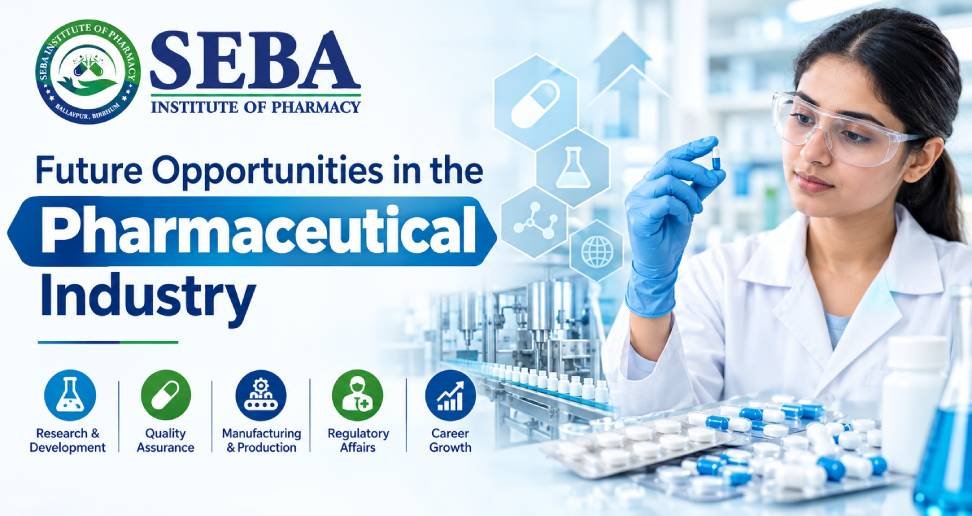
The pharmaceutical industry is one of the most important sectors in the healthcare ecosystem. It plays a major role in developing medicines, improving disease management, supporting preventive healthcare, and enhancing the quality of life. With advances in science and technology, the industry is moving beyond traditional medicine manufacturing and creating new career paths for students and professionals.
The future opportunities in the pharmaceutical industry are expected to expand as demand for healthcare continues to grow. From research and drug development to biotechnology, clinical trials, quality assurance, and digital healthcare, pharmaceutical professionals can explore a wide range of career options.
Growing Scope of the Pharmaceutical Industry
The pharmaceutical sector is experiencing significant changes due to technological innovation, increasing healthcare awareness, and the development of advanced treatments. New medicines and therapies require professionals with knowledge of pharmacy, chemistry, biology, biotechnology, data analysis, and healthcare management.
The industry also offers opportunities across different stages of a medicine’s journey—from discovering a potential drug molecule and conducting laboratory research to clinical testing, manufacturing, quality control, marketing, and distribution.
This broad ecosystem makes pharmacy and pharmaceutical sciences valuable fields for students who want to build careers connected with healthcare and scientific innovation.
1. Research and Drug Development
Research and development will remain one of the most promising areas of the pharmaceutical sector. Pharmaceutical companies continuously work on discovering new medicines, improving existing treatments, and developing therapies for complex health conditions.
Professionals working in this area may contribute to:
- Drug discovery and formulation
- Laboratory research
- Preclinical studies
- Pharmacological research
- New drug development
- Improving drug delivery systems
Students interested in scientific investigation can pursue higher education and specialize in pharmaceutical research, medicinal chemistry, pharmacology, biotechnology, or related disciplines.
2. Biotechnology and Advanced Therapies
Biotechnology is transforming modern healthcare and creating exciting opportunities within pharmaceuticals. Biological medicines, vaccines, biosimilars, gene-based therapies, and other advanced treatment approaches are becoming increasingly important.
Pharmaceutical professionals with knowledge of biotechnology can work in areas such as biopharmaceutical manufacturing, biological research, vaccine development, and quality testing.
As scientific understanding improves, this field is likely to create more specialized roles for professionals who combine pharmaceutical knowledge with biotechnology skills.
3. Clinical Research and Clinical Trials
Before a new medicine reaches patients, it generally needs to undergo extensive testing to evaluate its safety and effectiveness. Clinical research is therefore an essential part of pharmaceutical development.
Career opportunities in this field may include:
- Clinical research associate
- Clinical research coordinator
- Clinical data management professional
- Clinical trial assistant
- Regulatory research professional
Professionals in clinical research help coordinate studies, maintain documentation, monitor trial processes, and support compliance with established requirements.
4. Pharmaceutical Manufacturing
Manufacturing is another major area offering long-term career opportunities. Pharmaceutical manufacturing involves producing medicines according to strict quality and safety standards.
Professionals may work in:
- Production
- Manufacturing operations
- Formulation
- Packaging
- Process development
- Production management
With increasing demand for medicines, vaccines, and healthcare products, pharmaceutical manufacturing is expected to continue requiring trained and skilled professionals.
5. Quality Control and Quality Assurance
Maintaining the quality, safety, consistency, and reliability of medicines is critical to the pharmaceutical industry. This creates continuous demand for professionals specializing in quality control and quality assurance.
Quality control professionals may conduct laboratory testing of raw materials, manufacturing samples, and finished products. Quality assurance professionals focus on systems, documentation, processes, and compliance.
Students who develop strong analytical, documentation, and problem-solving skills can explore promising careers in these areas.
6. Regulatory Affairs
Pharmaceutical companies must follow numerous regulations before medicines can be developed, manufactured, marketed, and distributed. Regulatory affairs professionals help organizations understand and meet these requirements.
Their responsibilities can include preparing regulatory documents, supporting product registrations, maintaining compliance records, and communicating with relevant regulatory authorities.
As pharmaceutical products become more sophisticated and regulations continue to evolve, regulatory affairs is likely to remain an important career field.
7. Pharmacovigilance and Drug Safety
The safety of medicines does not stop being important after a product reaches the market. Pharmacovigilance focuses on identifying, evaluating, understanding, and preventing adverse effects or other medicine-related problems.
Professionals in this area may work with safety reports, medical information, adverse-event data, and drug safety documentation.
The increasing focus on patient safety is expected to support continued demand for qualified professionals in pharmacovigilance.
8. Digital Technology and Data Science
Technology is becoming increasingly integrated into pharmaceutical research and healthcare. Artificial intelligence, machine learning, automation, big data, and digital platforms can support drug discovery, clinical research, manufacturing, and healthcare decision-making.
Future pharmaceutical professionals may benefit from developing skills in:
- Data analysis
- Artificial intelligence
- Digital health technologies
- Research software
- Bioinformatics
- Healthcare analytics
The combination of pharmaceutical knowledge and technology skills can create new interdisciplinary career opportunities.
9. Pharmaceutical Marketing and Management
Not every pharmaceutical career is laboratory-based. Pharmaceutical companies also need professionals for sales, marketing, business development, product management, supply chain, and administration.
Professionals with pharmaceutical knowledge and strong communication or management skills can explore positions in pharmaceutical marketing and commercial operations.
An understanding of medicines and healthcare, combined with business skills, can be particularly useful for management-oriented career paths.
10. Entrepreneurship and Pharmaceutical Business
The pharmaceutical sector also provides opportunities for entrepreneurship. Qualified professionals may explore businesses related to pharmaceutical distribution, healthcare products, medical services, formulation, consultancy, or other healthcare-focused ventures, subject to applicable laws and regulations.
Entrepreneurship can allow professionals to combine their scientific knowledge with business planning, innovation, and leadership.
Skills Needed for Future Pharmaceutical Careers
The pharmaceutical industry is becoming increasingly interdisciplinary. Academic qualifications remain important, but employers may also value practical and professional skills.
Students and professionals can strengthen their career prospects by developing:
- Scientific and analytical thinking
- Research skills
- Communication abilities
- Computer and data skills
- Problem-solving capabilities
- Attention to detail
- Documentation skills
- Teamwork and collaboration
- Knowledge of industry standards and regulations
- Willingness to learn new technologies
Continuous learning will be particularly important because pharmaceutical science and healthcare technology are constantly evolving.
Educational Pathways and Career Preparation
Students interested in pharmaceutical careers can consider academic programs such as Diploma in Pharmacy, Bachelor of Pharmacy, Master of Pharmacy, pharmaceutical sciences, biotechnology, clinical research, and related programs.
The right educational pathway depends on a student’s interests and long-term career goals. Practical exposure, laboratory experience, internships, projects, and industry-oriented learning can also help students understand how pharmaceutical organizations operate.
Higher education can be particularly beneficial for individuals interested in specialized areas such as research, advanced drug development, pharmacology, pharmaceutical technology, or regulatory affairs.
Conclusion
The future opportunities in the pharmaceutical industry extend far beyond traditional pharmacy roles. Research, biotechnology, clinical trials, manufacturing, quality assurance, regulatory affairs, pharmacovigilance, digital technology, marketing, and entrepreneurship are among the areas where professionals can build meaningful careers.
As healthcare needs continue to evolve, pharmaceutical organizations will require skilled professionals who can combine scientific knowledge with practical expertise and modern technology. For students considering a career in healthcare and pharmaceutical sciences, developing strong academic foundations along with practical and digital skills can help prepare them for the changing demands of this dynamic industry.
The pharmaceutical sector offers a diverse professional landscape, making it an attractive option for individuals who are passionate about science, healthcare, innovation, and improving patient outcomes.